

The Offseason Advantage: Why Real Development Happens Away from the Spotlight
Basketball development doesn’t happen in highlights. It doesn’t happen in box scores. And it definitely doesn’t happen by accident.
Real growth happens quietly; in empty gyms, in repetitive reps, in uncomfortable workouts, and in intentional offseason training. While AAU basketball has become a dominant space for exposure and competition, the reality is that relying on AAU alone for development is a losing strategy.
AAU today is all over the place.
There are great programs, great coaches, and great environments. But there are also countless teams built around weekend tournaments, short-term wins, and loosely connected rosters, and coaches with quite literally 0 background in the game. The emphasis has slowly shifted from development to performance. From building players to showcasing players. Winning meaningless tournaments has started to matter more than building meaningful skill. That shift creates a dangerous illusion: playing more games equals getting better. It doesn’t.
Game reps expose what you already have.
Training is what builds what you don’t.
Individualized training targets weaknesses.
It slows the game down.
It creates habits.
It teaches footwork, spacing, timing, balance, and decision-making. Those things don’t magically appear because you played five games in a weekend.
AAU environments often prioritize systems revolved on a couple of star players, set, “boxed-in” roles, and rotations that help teams win now. That makes sense for competition, but it does very little for long-term player growth. A player can hide inside a system. A player can survive off athleticism. A player can score without being fundamentally sound. A player can be a poor defender and be ignorant to it because there’s no teaching.
But the offseason removes hiding. It forces players to confront their game honestly.
- Can you shoot consistently when guarded?
- Can you handle pressure without panic?
- Can you finish through contact?
- Can you create space without a screen?
- Can you move without the ball?
- Can you catch up to next level game terminology?
- Can you communicate better than anyone else you ever come across?
- Can you guard 1:1?
These are training questions. Not tournament questions.
AAU is Performative
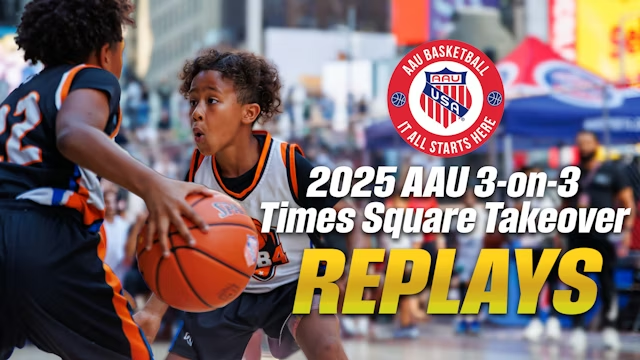
Yes, there is also a performative layer to modern AAU. Social media clips, mixtapes, and stat graphics create a version of success that looks fashionable but isn’t real. Players start training for clips instead of mastery. They chase moves instead of sharpening foundations. Offseason training flips that mindset.
It’s not flashy.
It’s not viral.
But it compounds.
Players who commit to consistent, structured offseason routines build skills that stack on top of each other. Shooting mechanics become repeatable. Ball-handling becomes automatic. Reads become instinctual.
By the time winter arrives, when games actually matter, when school seasons start, when rotations tighten and competition sharpens… those players look different.
Not because they suddenly improved. Because they’ve been improving the whole time. AAU can be a valuable platform. But it is not a development plan.
The players who separate themselves are rarely the ones who played the most games in July.
They’re the ones who treated the offseason like an investment. And investments always pay interest.
From a College Basketball Coach
Here is a soluble plan for high school / dedicated youth athletes for a week-to-week model to see noticeable three month growth through a season.
1. Skill Work (4–5 Days Per Week)
- Shooting: intentional reps, game-speed shots, movement shooting
- Ball-handling: change of pace, change of direction, pressure control
- Finishing: both hands, contact finishes, touch around the rim
- PICKUP PLAY: 1s, 2s, 3s, 4s, 5s, don’t care. PLAY!
2. Game Reads (2–3 Days Per Week)
- Small-sided games (Implicate rules: 1v1, 2v2, 3v3)
- Advantage situations (closeouts, downhill attacks, kick-out reads)
- Film study & guided breakdowns
3. Strength & Conditioning (3–4 Days Per Week)
- Lower-body strength
- Core stability
- Movement mechanics and injury prevention
4. Recovery & Mobility (Daily)
- Stretching
- Foam rolling
- Sleep, hydration, and nutrition
5. Consistency Over Intensity
- Short, focused workouts beat random long sessions
- Stack good days
- Track progress weekly